

Content centralization: Why it's essential for AI
As someone who has been in the fast-paced world of marketing for years, I've seen many trends come and go. But one change remains: The rise of artificial intelligence (AI) in content creation and strategy. AI is fundamentally changing how we produce, manage, and distribute content. And if you don't adapt, you'll be left behind.
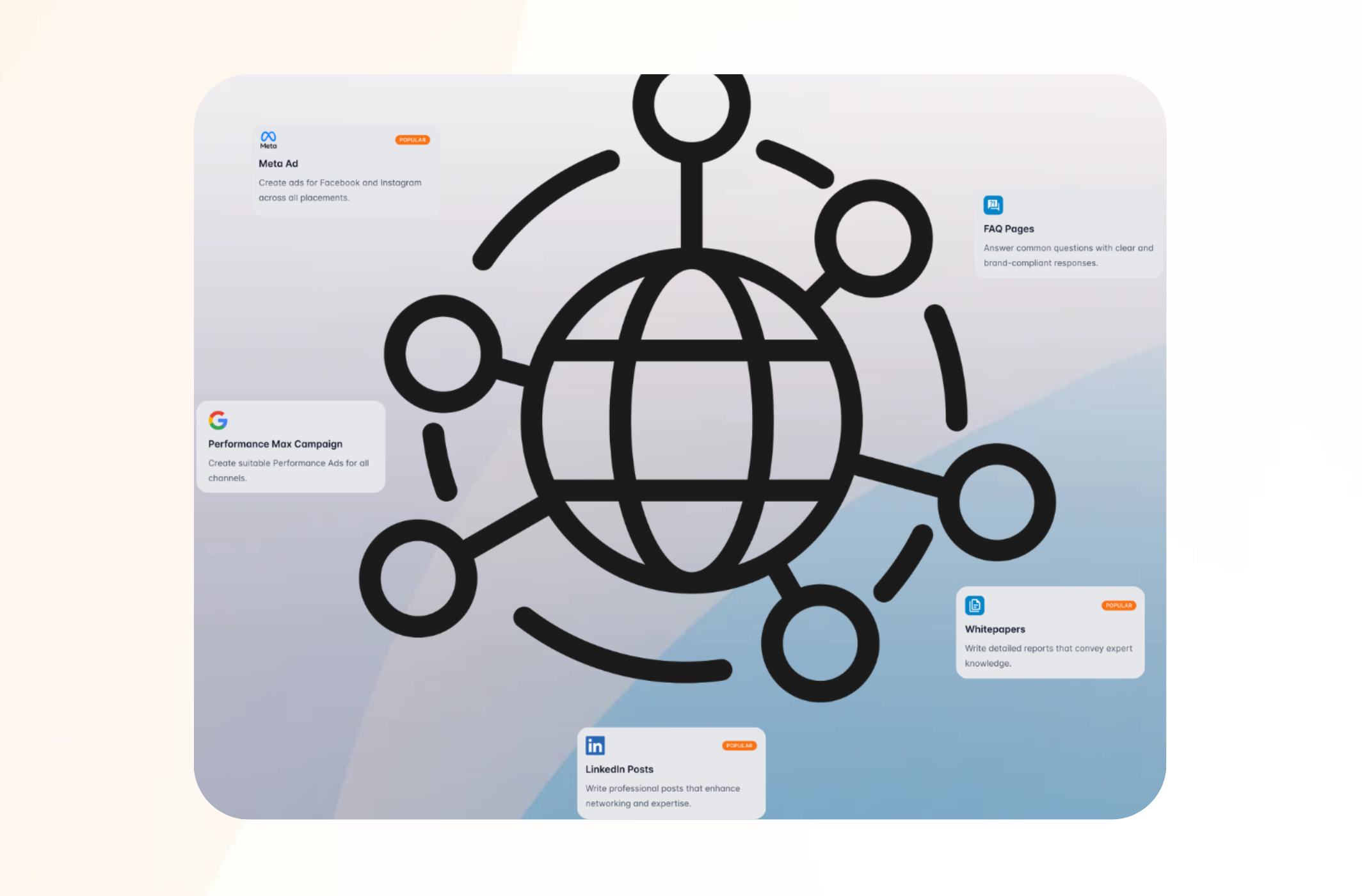
But AI is only as good as the data it can access. And this is exactly where many marketers have a problem: Content is scattered across different platforms, teams work in isolation, and an unstructured content archive makes it much more difficult to utilize AI potential.
The solution?
Manage content centralization in one place
This goes far beyond simple order. It's about enabling a smarter, more strategic, and AI-powered future for your marketing. Why content centralization is no longer optional but essential:
Keep track of your brand communication
Every brand communicates across multiple channels — blogs, social media, email newsletters, ads, white papers, and more. Without a central repository, you quickly lose track of what content you've published where and whether your brand message remains consistent.
When you organize your content in one place, you can:
- Avoid duplicate content — Never accidentally cover the same topic again because you don't know that you've already discussed it.
- Maintain consistency — Keep your tone and brand identity consistent across all platforms.
- Enable better collaboration — Your team can easily access previous content and avoid working in isolation.
A central content platform gives you an overview and ensures that your message remains clear and consistent.
Targeted control of your content strategy
Content marketing isn't just what you publish today, but also what you've created in the past and how it fits into your future strategy.
By centralizing content, you can:
- Keep track of what topics you've already covered — avoid duplicate content and use existing material strategically.
- Identify content gaps — Find out where you haven't covered enough yet to specifically expand your strategy.
- Distribute topics better — Make sure you don't overload one area while neglecting others.
A structured content archive turns gut feeling into data-based decision-making.
Use existing content for the future
Good content isn't unique — it's a long-term resource. What you create today can still be valuable tomorrow.
With a central filing system, you can:
- Recycle high-quality content — convert blog articles into LinkedIn posts, incorporate social media threads into email newsletters, or prepare white papers in infographics.
- Optimize SEO and content longevity — Update older content to keep it relevant.
- Plan campaigns more efficiently — develop successful strategies instead of starting from scratch over and over again.
Your content should be a long-term asset—not a one-time investment.
Current AI tools exacerbate the problem
Many marketers are excited about AI-powered content creation — but they overlook a key weakness: Most AI tools work in isolation and without context.
When you use AI to generate content, here's what happens:
- She creates texts in her own editor without knowing which campaign they belong to.
- She doesn't know the intended use — Is the content needed for a blog, social media, an ad or a newsletter?
- It doesn't have access to past performance data, so it can't learn from successful or unsuccessful content.
- Engagement data, conversions and analytics are stored in separate tools — the AI-generated material remains decoupled from real marketing success.
This means that AI currently only solves the creation process, but not the actual problem: optimization, strategic planning, and data-based improvement.
With a central content platform, you can:
- Feed AI with your entire content history — This allows it to create content that fits your previous strategy.
- Connect AI-generated content with real performance data — So that AI not only spits out texts, but also learns what works.
- Using AI for more than just texts — automated content planning, data-driven recycling, and developing a cross-channel strategy.
AI is the future of marketing — but without organized content, it remains a blunt tool.
Prepare your content for AI and automation
This is the real opportunity: AI is only as strong as the data it understands. If your content is scattered everywhere, AI won't be able to capture your brand voice, offer, and tonality.
By centralizing content, you can:
- Provide AI with a complete picture of your brand — this allows it to better understand your messages, expertise, and key topics.
- Improve AI-powered personalization — A well-structured database helps AI make tailored recommendations for different target groups.
- Enable smarter content automation — AI can better summarize, reuse, and optimize publishing times.
The future of marketing isn't either human or AI-powered — it's a combination of both.
The future belongs to structured content
AI is evolving rapidly — and marketers who don't adapt are falling behind. The days of scattered, unstructured content are gone.
If you want to work efficiently in the future, you need a centralized content strategy that:
- provides a clear overview of all communication measures
- helps to manage topics strategically
- enables the recycling and planning of content
- Empowers AI to truly understand and amplify your brand
The question is no longer whether you should aim for content centralization — but how quickly you can start.